1918 Pandemic Masks; Anyone interested? What Can History Teach Us?

Go to the CDC website to learn more about masks and COVID: https://www.cdc.gov/coronavirus/2019-ncov/prevent-getting-sick/diy-cloth-face-coverings.html
Hey there fellow peoples, would anyone be interested in purchasing historical reproduction 1918 pandemic masks on our Etsy? Please comment, so I can see if I should purchase fabric!
Let's do some research; what were masks like back then?
In this picture from 1918, we see white fabric, which was probably cotton (polyester wouldn't be invented until about twenty years later), and linen was expensive, so not practical for something like a mask. Ah yes, people didn't comply with the rules then either ):

Image credit: The New York Times
We also know that masks should be at least three layers and include a filter if possible.
We see square mask shapes in most images.
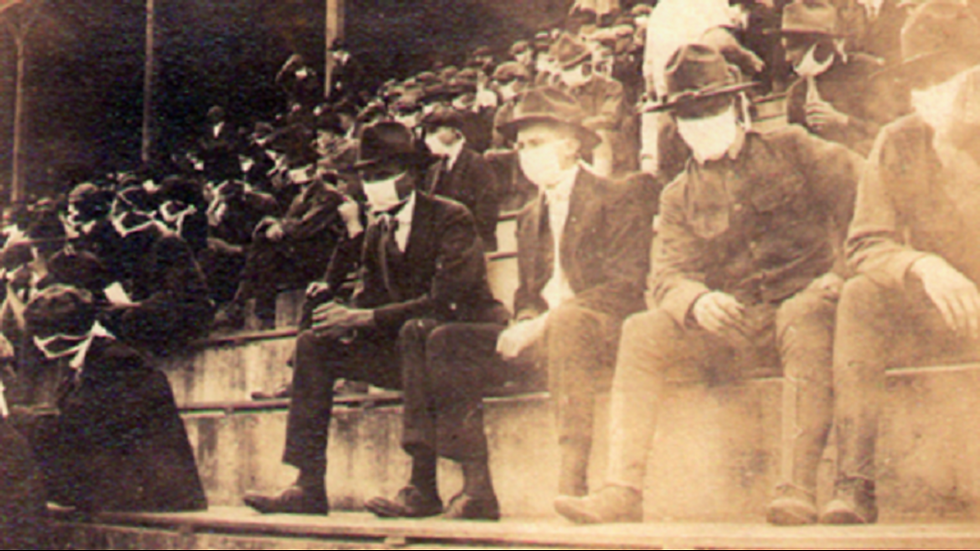
They appear to not have any gathering, and to tie behind the ears like modern masks.

We see big chunky squares that go well below the chin, and sit just on the bridge of the nose.
On the image below, you can see the masks tie around the head, not on the ears. I'm very happy this picture was taken; the picture is a great find and super helpful!!

We can see a bigger mask on the left that appears to be cotton gauze and has no straps at all - it ties in the back, and seems to have the shape of a dish cloth. The mask on the right has a tighter fit - and has straps to tie. It also appears to be made of a more substantial fabric.

Another gem! Not sure if cheesecloth fits the CDC guidelines though, so I'm going to stay away from that.

Masks often seemed to hang open in the bottom, which is also not a good idea.

These instructions seem odd... but I can stand behind avoiding worry, fear, and fatigue.

This is an original mask. Appears to have a thicker tie in the top and a less substantial one on the bottom, with layers of gauze or cheesecloth. I think I will try and re-create this type of mask, but use thickly woven cotton instead and add a hole for a filter to go in. These details are not historically accurate, but we need to be safe!


Comments